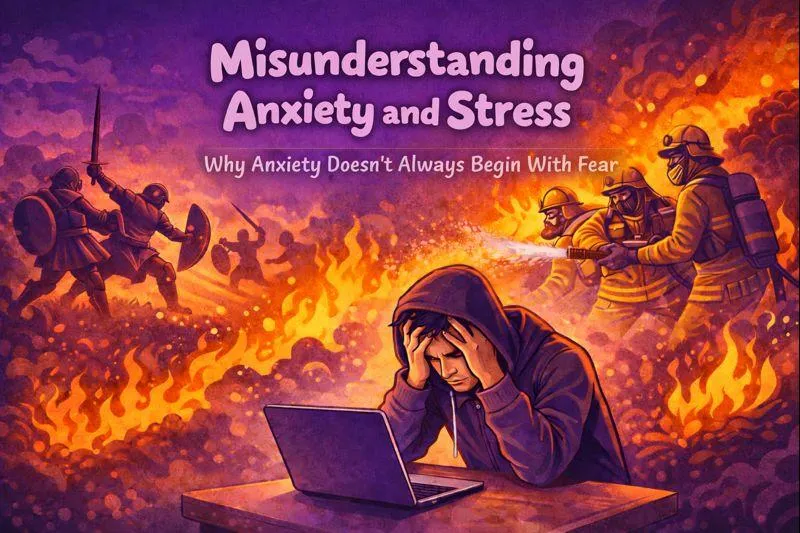
Misunderstanding Anxiety and Stress Why Anxiety Doesn’t Always Begin With Fear
Before all of this happened, I wasn’t an anxious person.
I wasn’t someone who worried excessively or avoided life. I wasn’t timid, nervous, or afraid of pushing myself outside my comfort zone. If anything, I was the opposite.
When life got hard, I did what many of us are taught to do, especially men. I manned up.
I pushed forward. I problem‑solved. I took action. I went after my goals and trusted that whatever came next, I’d deal with it the same way I always had.
I took risks, built businesses, carried responsibility and lived with constant pressure, even when things felt heavy. Stress wasn’t something I consciously noticed, and it certainly wasn’t something I thought I was struggling with. Only in hindsight can I see how much of it I was carrying.
At the time, it all felt normal.
I prided myself on being resilient. When the going gets tough, the tough keep going. That mindset had served me well for most of my life, so I never questioned it.
That’s why, when everything eventually collapsed, the words anxiety and panic disorder didn’t sit right with me at all.
What I experienced didn’t feel like nervousness. It didn’t feel like worry. And it certainly didn’t feel like fear in the way people usually describe it.
What happened to me felt far more serious than that.
And yet, paradoxically, it still turned out to be “just anxiety”, something I wrote about in yesterday’s blog.
I Wasn’t an Anxious Person
When people hear the word anxiety, many picture someone who has always been cautious or easily overwhelmed. Someone who worries about small things, avoids risk, and struggles to step outside their comfort zone.
That’s how I used to understand the word.
And that simply wasn’t me.
I lived a full life. I travelled. I took chances. I made big decisions and accepted that pressure was part of pursuing something meaningful.
Did I have stress? Of course.
Did I have responsibility? More than most.
But I functioned.
I showed up.
Even when things were difficult, I kept moving forward.
I didn’t slow down or give myself space to recover, I just absorbed more.
Looking back now, I can see that my nervous system was under constant strain. But when stress becomes familiar, it stops registering as stress at all. It simply becomes your baseline.
When Pushing Through Finally Breaks You
For years, I believed that persistence solved everything. If something wasn’t working, you pushed harder. If life became uncomfortable, you kept going. I believed that strength meant endurance, and that my mental toughness and desire to succeed would eventually pull me through whatever came next.
I wasn’t consciously ignoring warning signs, I genuinely didn’t see them. Life was moving at a hundred miles an hour and I was permanently reacting. There was always another problem to solve, another decision to make, another situation demanding attention. I didn’t stop to think, plan or properly switch off. I simply dealt with what was in front of me and carried on.
Until one day, my body made a decision my mind refused to make.
It pulled the emergency brake.
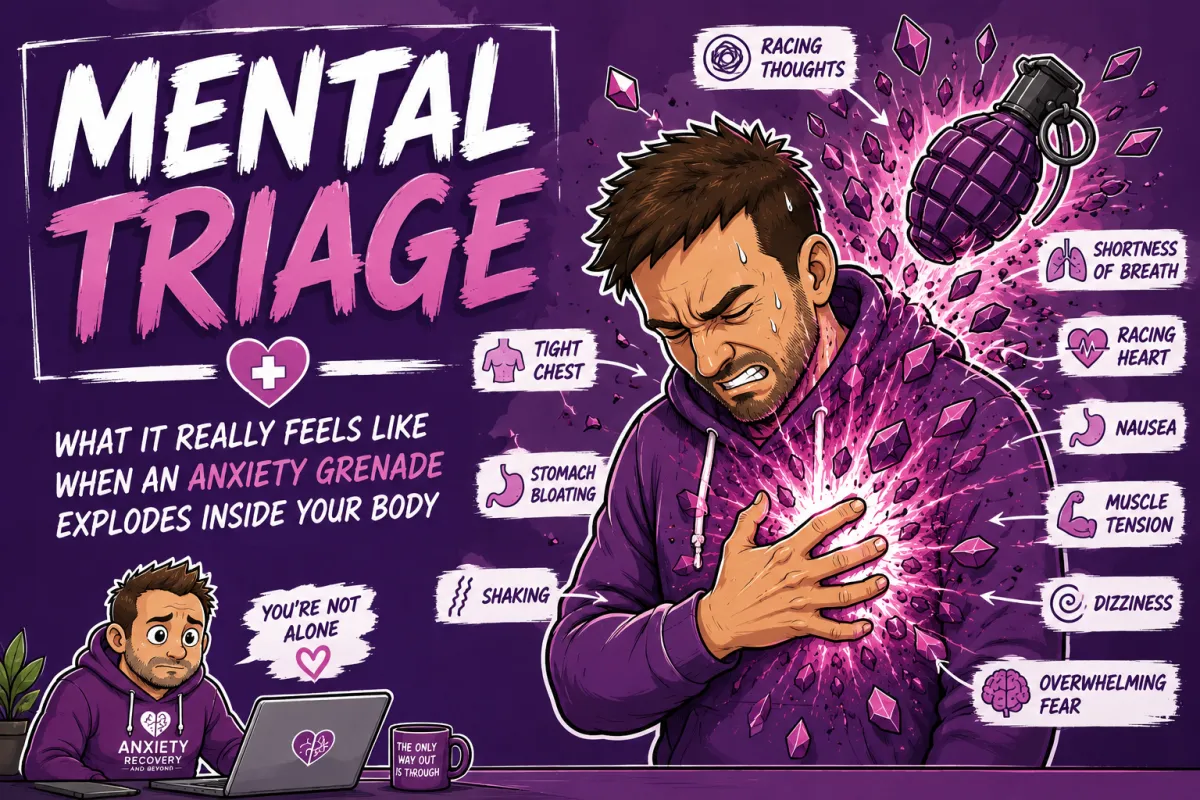
My heart began racing for no obvious reason. My chest tightened and waves of adrenaline flooded my body out of nowhere. After several sudden panic attacks, I ended up in hospital convinced I was having a stroke.
My body felt as though it was shutting down. My thoughts became scattered and disorganised, and my mind spiralled towards worst‑case scenarios. My nervous system felt completely hijacked.
What confused me most was that the fear wasn’t attached to anything specific. There was no clear threat, no danger in front of me, no reason I could point to. And that lack of explanation made it even more frightening.
This didn’t feel like anxiety as I understood it. It felt like my entire system had reached breaking point.
Being Diagnosed With Anxiety and Panic Disorder
When doctors told me I had anxiety and panic disorder, it threw me completely.
I couldn’t reconcile the physical experience I was going through with the word anxiety. I wasn’t an anxious person, or at least, I’d never seen myself as one.
The diagnosis didn’t match my identity, and I think that disconnect made everything worse.
In my head, the question became:
If this isn’t anxiety, then what is really wrong with me?
Because I couldn’t accept the explanation, I searched relentlessly for others. Tests, symptoms, reassurance, endless late‑night Googling.
Instead of calming my nervous system, that search only convinced it further that something serious must be wrong.
Am I Dying or Is It Just Anxiety?
At the beginning, every sensation felt like a medical emergency.
A racing heart meant a heart attack.
Brain fog or slurred words meant a stroke.
Dizziness meant I was about to collapse.
Chest tightness felt dangerous.
My mind desperately searched for certainty, and the more I searched, the more my body reacted. Fear fed symptoms, and symptoms fed fear.
I was trapped in panic.
What I didn’t understand then was that anxiety can produce sensations that feel genuinely life‑threatening, even when you are completely safe.
Can Anxiety Really Cause These Physical Symptoms?
This was one of the hardest truths for me to accept, largely because the word anxiety itself confused me.
To me, anxiety had always meant nervousness or mental worry. What I was experiencing didn’t feel mental at all. It was happening in my body.
My heart raced without warning. My muscles were permanently tense. My breathing became shallow and unnatural. My system felt as though it was firing constantly, even when I was sitting still.
Nothing about it felt imagined or exaggerated.
The symptoms were real, even if the danger wasn’t.
Why Does Anxiety Feel So Physical?
Because anxiety doesn’t live only in your thoughts.
It lives in the nervous system.
Once the body perceives threat, it reacts instantly, long before logic or reasoning can intervene. The body moves first, preparing for danger, and the mind tries to catch up afterwards.
That’s why anxiety can feel completely out of proportion to what’s happening around you. Your system isn’t responding to reality, it’s responding to perceived threat.
Is This Anxiety or Something More Serious?
This question kept me trapped for months.
I searched constantly for proof that this was “just anxiety” and not something being missed.
Eventually, slowly and reluctantly, I had to accept the truth.
There was no hidden illness underneath.
Nothing sinister going unnoticed.
My nervous system was simply stuck in survival mode.
Why Does My Body Feel Stuck in Fight or Flight?
Fight or flight is meant to be temporary.
It’s a primal response designed to protect us from danger and then switch off once the threat has passed.
But prolonged stress prevents that switch from flipping back.
To the body, stress feels the same as danger.
When pressure becomes constant, the nervous system forgets how to stand down. That’s when symptoms begin appearing even during rest.
Anxiety Is the Wrong Word
The more I reflected on what had happened to me, the clearer it became that the word anxiety simply didn’t seem to fit.
Anxiety and being anxious aren’t quite the same thing. The medical label tends to suggest worry or nervous anticipation fear of something specific, but that wasn’t what I felt I was experiencing.
I’ve been nervous in my life. I’ve worried about outcomes and future events. That’s a normal human response and something everyone experiences at times.
What I went through felt very different.
It felt like a full-body shutdown, a complete overload of my nervous system. It didn’t feel as though my thoughts were creating fear; it felt as though my body had taken over after years of accumulated pressure.
What I eventually realised was that anxiety doesn’t always begin with fear. Sometimes it begins with pressure.
Or at least, that’s what I believed at the time.
Is Anxiety Actually Nervous System Burnout?
As I began to understand my recovery more deeply, I realised something important.
Underneath it all, there was worry, it just didn’t look like the kind of anxiety I’d always associated with the word.
My worry didn’t come from speaking in front of people, snowboarding, social situations or doing adventurous things. Those were the scenarios I had always linked with people being scared of and anxious because they had a fearful pesonality and my persoanlity wasn't fearful.
Instead, my worry came quietly and consistently from years of pressure.
Running a business.
Emotional trauma.
Financial stress.
The constant responsibility of making decisions and living with their consequences, not just for myself, but for my family, my staff and everyone who depended on me.
Every decision created another what if.
And those what ifs stacked up over time.
Individually they felt manageable. Collectively they became relentless and overwhelming.
That ongoing mental load, constantly thinking ahead, anticipating problems, carrying responsibility, kept my nervous system activated far longer than it was ever designed to be. It was a mental worry and not one I clocked until it was too late.
Eventually, it didn’t ask me to slow down.
It demanded that I stop.
Can Long‑Term Stress Cause Anxiety Symptoms?
I’ve come to believe that stress and anxiety are deeply connected, and that the physical response to long-term stress is often what eventually creates anxiety.
Those constant micro-decisions and endless what if questions quietly build in the background. If they go unchecked, they don’t just stay in the mind, they create ongoing worry and tension in the body. How you perceive those what-if scenarios, and where your attention repeatedly goes, can gradually increase the stress response without you even realising it.
Over time, the body begins to adapt to that pressure.
When stress hormones such as adrenaline and cortisol remain elevated for too long, the nervous system becomes sensitised. It starts reacting more quickly, more intensely, and often without a clear trigger.
That’s why symptoms can seem to appear out of nowhere, even during periods when life looks calm on the surface. The external pressure may have eased, but the nervous system hasn’t yet learned that it’s safe to stand down.
Why Does My Body React Even When My Mind Is Calm?
This was one of the most confusing parts of the entire experience.
There were days when my thoughts felt relatively steady, yet my body would still react with panic, tension or adrenaline. That disconnect made me feel as though I was losing control.
What I later learned is that the nervous system doesn’t respond to logic or reassurance. It responds to past experience, overload and exhaustion.
Healing, therefore, isn’t about convincing your mind that you’re safe. It’s about repeatedly showing your body that the danger has passed.
Why Won’t My Anxiety Symptoms Go Away?
There was a point in time ( a long period in fact) where I would ask this all the time. I just wanted the symptoms to go away and be back to normal.
But recovery isn’t instant and it takes time.
A sensitised nervous system needs time, consistency and patience.
Symptoms fade gradually as safety is restored, not through force, but through gentleness.
How Do You Calm an Overstimulated Nervous System?
For a long time I tried to fight the symptoms, suppress them or make them disappear. None of that worked.
What eventually helped was changing how I responded when they appeared. By breaking the fear of the symptoms and stopping the anxiety loop.
Instead of panicking or searching for answers online, I began reminding myself that this was my nervous system reacting, not a medical emergency. I would tell myself, calmly and repeatedly, that I was safe and that the sensations would pass.
Once fear was removed from the equation, the symptoms gradually lost their fuel.
Healing Begins With Understanding, Not Toughness
If I had been told I was suffering from stress and burnout I think I could of accepted it a lot easier than Anxiety and Panic Disorder, as it would have made sense to me, I knew I'd been through a lot of extremely stresful situations in my life and looking back I can totally understand how I developed Anxiety.
I can see how closely related symptoms of stress and Anxiety are. I can understand why my body would want to shut down and hide from the amount of stress I was under. It took me a long time to come to that realisation because of the Anxiety label I was given.
Now I understand something very different.
I thought having Anxiety meant I was weak and I was broken but what it actually meant was I had endured so much and carried so much for so long I just needed to rest and recalibrate.
Once I understood why I was feeling Anxious and that the symptoms in my body were causing the worrying thoughts I was able to start taking back control.
I didn’t suddenly become an anxious person. My nervous system was exhausted.
And understanding that truly understanding it, was the moment real healing began.
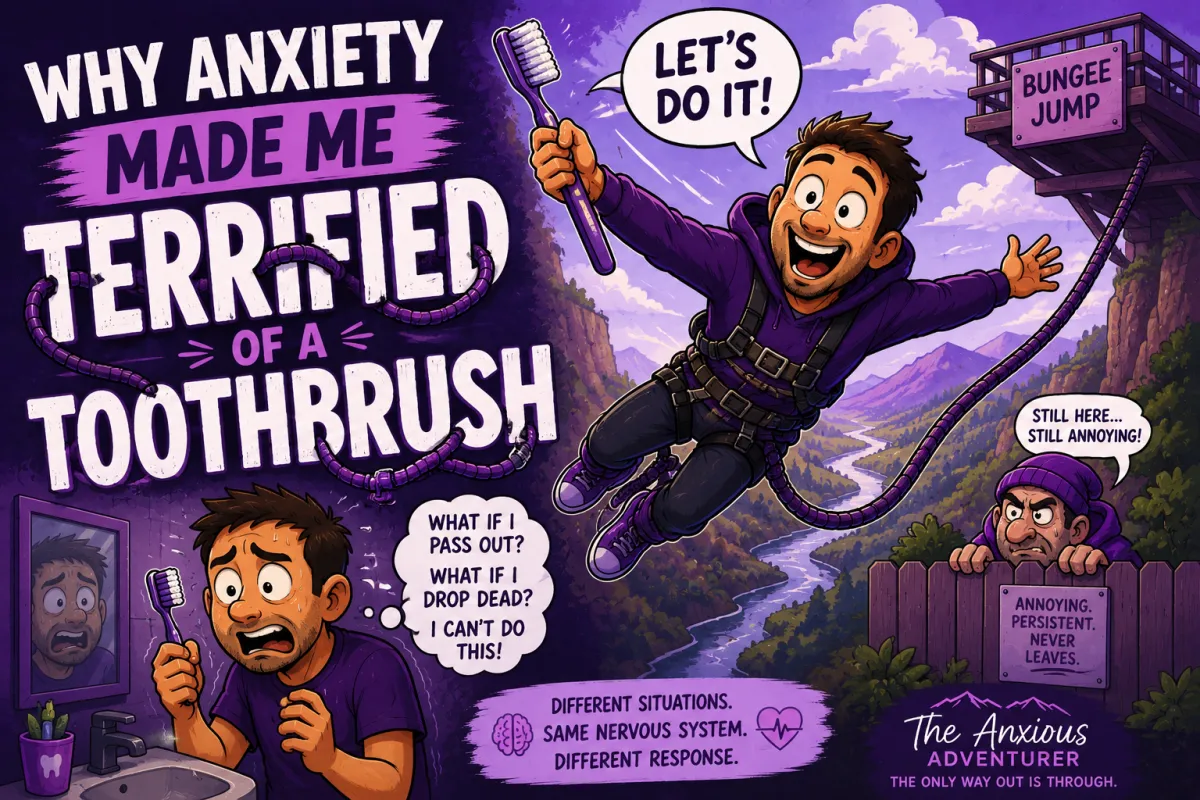
Because this was never about fear. I wasn't scared to drive, eat, walk, shower, my body was just so sensitised to danger that it signalled everything was danger.
It was about burnout.
And recovery didn’t begin when I tried harder.
It began when I finally allowed myself to stop.






Mail
Facebook
LinkedIn
X
Pinterest
Snapchat
Reddit