How to Manage Anxiety - the Catch 22 of Recovering from Anxiety and Panic Disorder
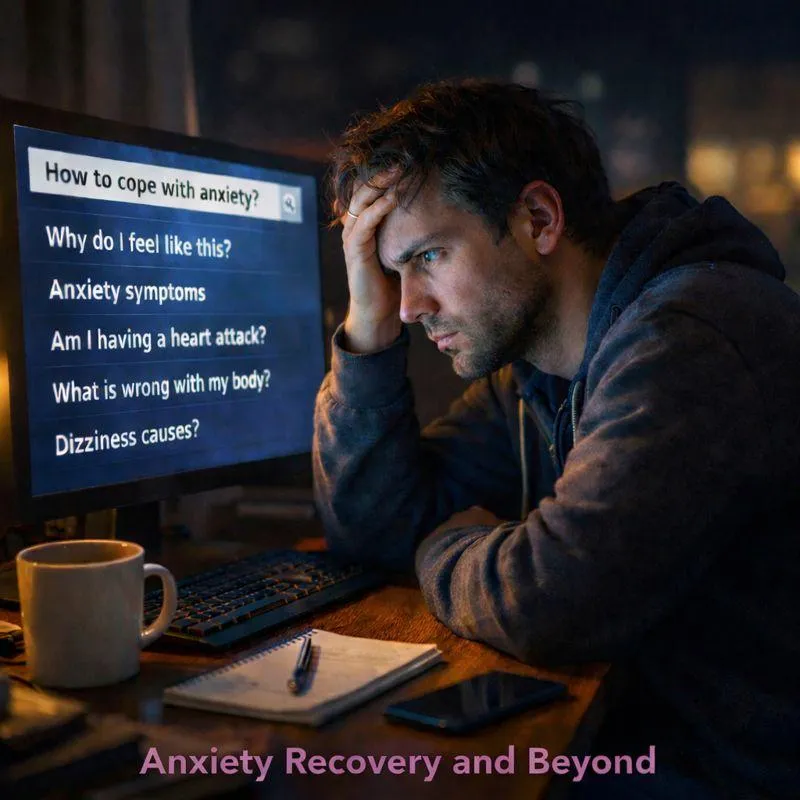
If you could look back through my internet search history during the worst period of my anxiety, you would probably see the same phrases appear again and again, sometimes multiple times a day, sometimes late at night when I couldn’t sleep, sometimes first thing in the morning when I woke up already in a state of panic, cortisol running through my veins. .
"How to manage Anxiety"
Closely followed by things like:
How to cope with anxiety.
Why do I feel like this.
Anxiety symptoms.
Why won’t my anxiety go away.
What is wrong with my body.
My conversations with Chat GPT would show the same thing.
What does a heart attack feel like?
How do I know if I'm having a stroke?
What can cause Dizziness?
How is my body shaking?
What can I do to stop these sensations?
At the time, I didn’t think anything of it. I wasn’t analysing my behaviour or questioning whether searching was helping or harming me. I was simply scared. My body felt completely different to how it used to. My mind felt hijacked by fear. New sensations appeared without warning, and I had no reference or understanding of what was happening.The doctors said all my vitals were fine but I felt awful, so in my mind there had to be something seriously wrong. I figured they had diagnosed me wrongly and I wanted to find out what was really wrong.
So I did what most people do when something feels wrong.
I searched for answers.
As a result my social media feeds are now littered with Anxiety and Panic Attack posts because the algorythms have picked up on my searches and giving me more content on it.
When anxiety begins, searching feels like survival
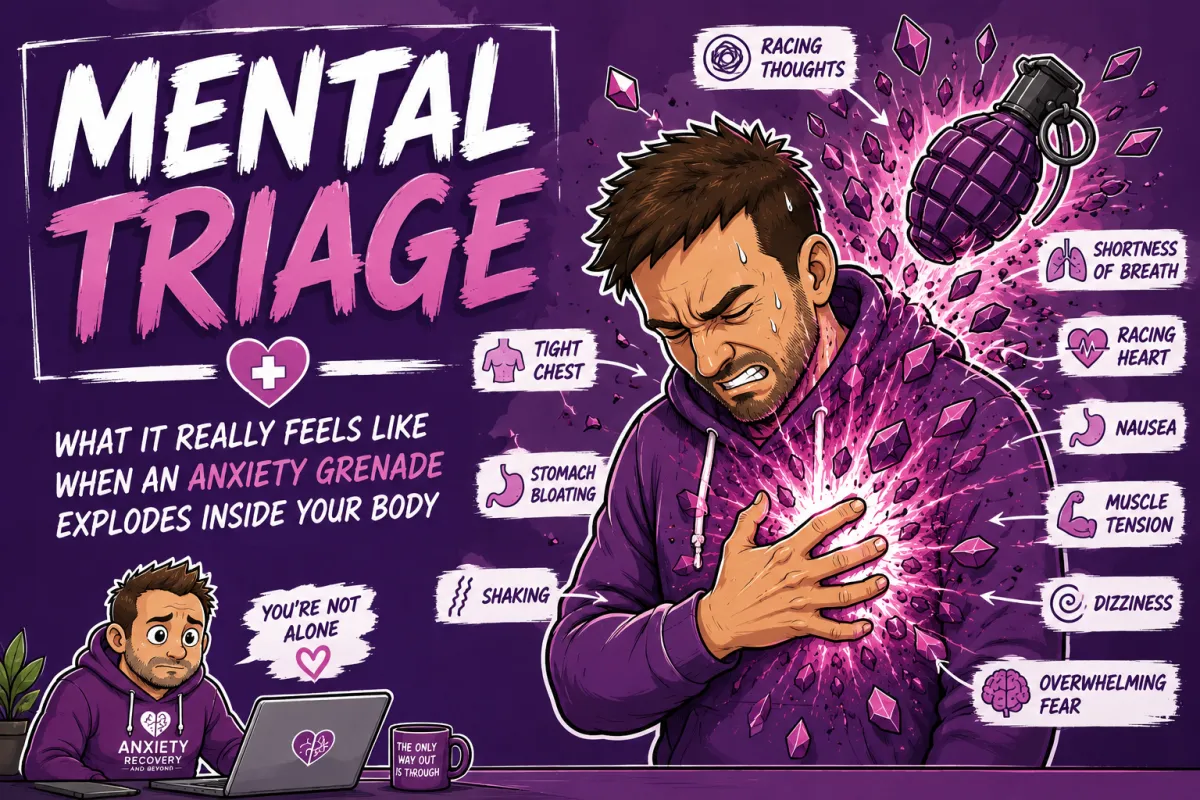
When anxiety first enters your life, it doesn't arrive gently or with an explanation or a how to deal with Anxiety guide book. It doesn’t tap you on the shoulder and calmly tell you what’s happening. It crashes in through physical sensations, intrusive thoughts, waves of fear and a constant sense that something is deeply wrong.
Your heart races.
Your chest tightens.
Your breathing feels strange.
Your body feels weak, shaky or unreal.
And suddenly your mind becomes obsessed with one question:
Why is this happening to me? Something isn't right.
In that moment, Googling doesn’t feel optional. It feels necessary. It feels like the only way to regain control. You are not searching because you’re anxious, you’re searching because you want to stop being anxious or stop a panic attack. You want the feelings and sensations to go away.
Typing “how to manage anxiety” into Google feels hopeful. It feels proactive. It feels like you’re doing something to fix the problem.
And in many ways, that makes complete sense.
The Paradox of Anxiety
Googling Anxiety and Panic Disorder comes with a hidden catch-22 no one explains. Here’s what I figured out though;
To heal from anxiety and panic attacks, you often need information. You need reassurance that you’re not dying, not broken, not losing your mind. You need to understand what anxiety actually is and why your body feels the way it does.
But at the same time, the way anxiety pushes you to search can quietly keep the nervous system stuck in fear.
Because every time you search:
Why do I feel anxious all the time?
Are these anxiety symptoms normal?
Why does my body feel wrong?
Is this panic disorder?
Your mind may be looking for reassurance, but your body receives a different message altogether.
Something is wrong. Stay alert. Stay ready. Stay on guard.
The nervous system doesn’t understand Google or Chat GPT. It doesn’t understand logic, statistics or reassurance articles. It only understands perceived threat. And constant checking, analysing and researching, no matter how well intentioned, can signal danger rather than safety.
So the body stays tense.
And the anxiety loop continues.
When Googling anxiety symptoms makes fear worse
One of the most exhausting parts of anxiety is the symptoms themselves. They are so physical, so intense, so convincing that it becomes almost impossible not to search them or give them attention and think I need to fix this.
You feel dizzy — you Google dizziness.
Your heart races — you Google heart symptoms.
Your vision feels strange and blurry — you Google neurological issues.
The problem with Anxiety is the symptoms you feel can relate to thousands of different illnesses or ailments. So when you feel your heart beating out your chest or like its being stabbed with a knife, your mind automatiaclly thinks heart attack or stroke.
Within minutes you are reading pages filled with worst-case possibilities, personal stories, medical terms and contradictions. Even when anxiety is listed as a cause, your mind whispers:
“But what if mine is different?” or "This time it might be that worse case scenario"
That’s how anxiety works. It thrives on uncertainty, the what if's. It scans relentlessly for anything that could confirm danger. And the more information you consume, the more confusing everything becomes.
Instead of clarity, you feel more overwhelmed.
Instead of reassurance, you feel more afraid.
The reassurance-seeking loop
At first, searching helps.
You read something comforting and your body relaxes slightly. Your breathing deepens. The fear eases for a moment. You think, okay, maybe I’m fine.
But the relief never lasts.
Soon another sensation appears. Another thought. Another spike of fear.
So you search again.
And again.
Each time the reassurance works for a shorter period, until eventually you find yourself stuck in a loop of sensation, fear, searching, brief relief, and fear returning even stronger.
This is not because you’re doing anything wrong.
It’s because reassurance doesn’t teach the nervous system safety, it only temporarily reduces fear.
And anxiety is driven by fear.
You are not broken for doing this
If you recognise yourself in this, please understand something important.
You did not cause your anxiety by Googling.
You were not weak for searching.
You were not “obsessive” or “overthinking”.
You were scared, and you were trying to protect yourself.
Your body entered survival mode, and your mind did exactly what it was designed to do look for answers, solutions and certainty.
There is nothing wrong with you.
So how do you actually recover from anxiety?
Real anxiety recovery does not begin with finding the perfect article, the perfect technique or the perfect explanation.
It begins when the body slowly learns something different:
These sensations are not dangerous.
Anxiety symptoms are not signs of damage.They are signs of a sensitised nervous system.What you are experiencing is nervous arousal, a primal response
Your body and mind are not broken they are overprotective. When fear begins to soften, the nervous system stops scanning, that fire alarm in your head stops blaring. When the constant scanning for danger reduces, symptoms ease. When symptoms ease, confidence returns and you start to feel yourself again.
Not straight away, not tomorrow but over time.
The shift that changes everything
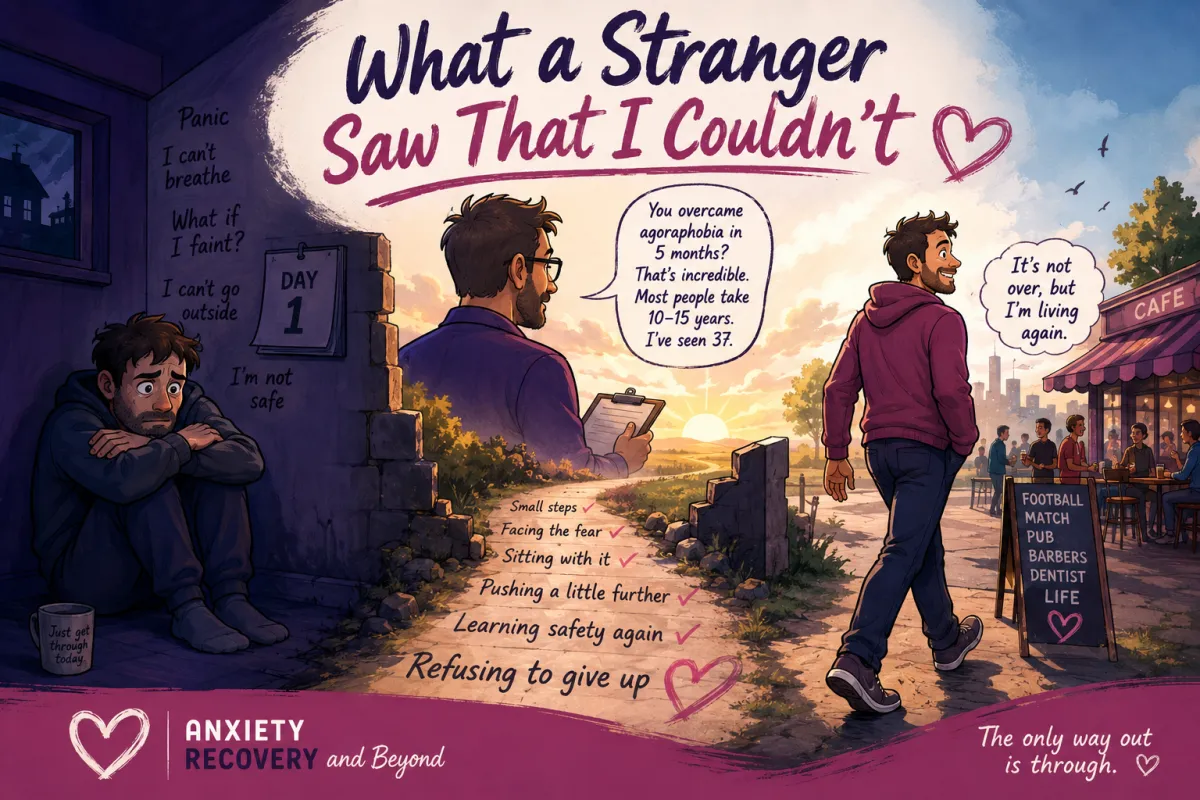
For me, the biggest turning point came when I accepted I had anxiety and panic disorder. I stopped trying to figure out “What is wrong with me?”
My language to myself changed. Instead of saying "Why do I feel like I'm having a heart attack, something is wrong". I said to myself "ok, you've been here before Graeme and you came through it. You've been through worse and survived.This is nothing more than nervous arousal"
When the sensations came, my immediate response wasn't "I need to fix this" it became "So effing what!"
I started challenging the symptoms and running towards them. I said things to myself like "if you are going to have a heart attack, you've got 20 seconds and if not then shut the F up" I figured if I was really having a heart attack I wouldn't still be thinking about it in 20 seconds time.
Did it stop the symptoms and sensations overnight? No.
But what it did, was stop feeding the loop. It gave my nervous system time to pause and stop scanning for danger.
I started teaching my body it was safe again. If I was taking to myself like this, my chimp brain figured there couldn't be anything wrong so the sensations lessened.
If you’re reading this because you searched for it
If you found this page because you typed “how to manage anxiety” or something similiar into Google, there’s a good chance you’re sitting there right now with your body buzzing, your chest tight, your thoughts racing, wondering whether what you’re feeling is anxiety again or something more serious this time.
I know that feeling and thought process well. And I want you to know something important before anything else:
You’re not behind.
You’re not broken.
You’re not doing recovery wrong.
You are where you are and that's ok. You can stop beating yourself up and being frustrated with yourself.
You’re at the stage where your body is frightened and your mind is desperately trying to protect you.
Nothing more.
So what do you actually do from here?
You begin by changing how you respond to what’s happening inside you.
When a sensation appears, instead of immediately analysing it, Googling it, or trying to make it stop, you gently remind yourself:
This is anxiety.
This is nervous arousal.
I am uncomfortable, not unsafe.
You don’t need to believe it fully at first. Your body won’t either. That’s okay.
You simply stop adding more fear on top of fear.
You let the sensations be there while you continue with your day as best you can, slowly, imperfectly, sometimes shakily, showing your nervous system through experience that nothing bad is actually happening.
Over time, your body learns something new. It learns that the sensations can come and go without danger. It learns that it doesn’t need to sound the alarm so loudly. It learns that you are safe, even when anxiety is present.
That’s how the loop begins to weaken.
Not by fighting anxiety.
Not by searching for certainty.
But by removing the fear response that keeps it alive.
Recovery doesn’t mean never feeling anxious again. It means anxiety no longer controls your choices, your thoughts, or your life.
And that process doesn’t start with doing more.
It starts with doing less, less checking, less searching, less monitoring, less trying to fix yourself.
Because there was never anything broken in the first place.
Your nervous system has just been trying to protect you for too long.
And with patience, understanding, and repeated moments of safety, it can learn to stand down again.
One moment at a time.
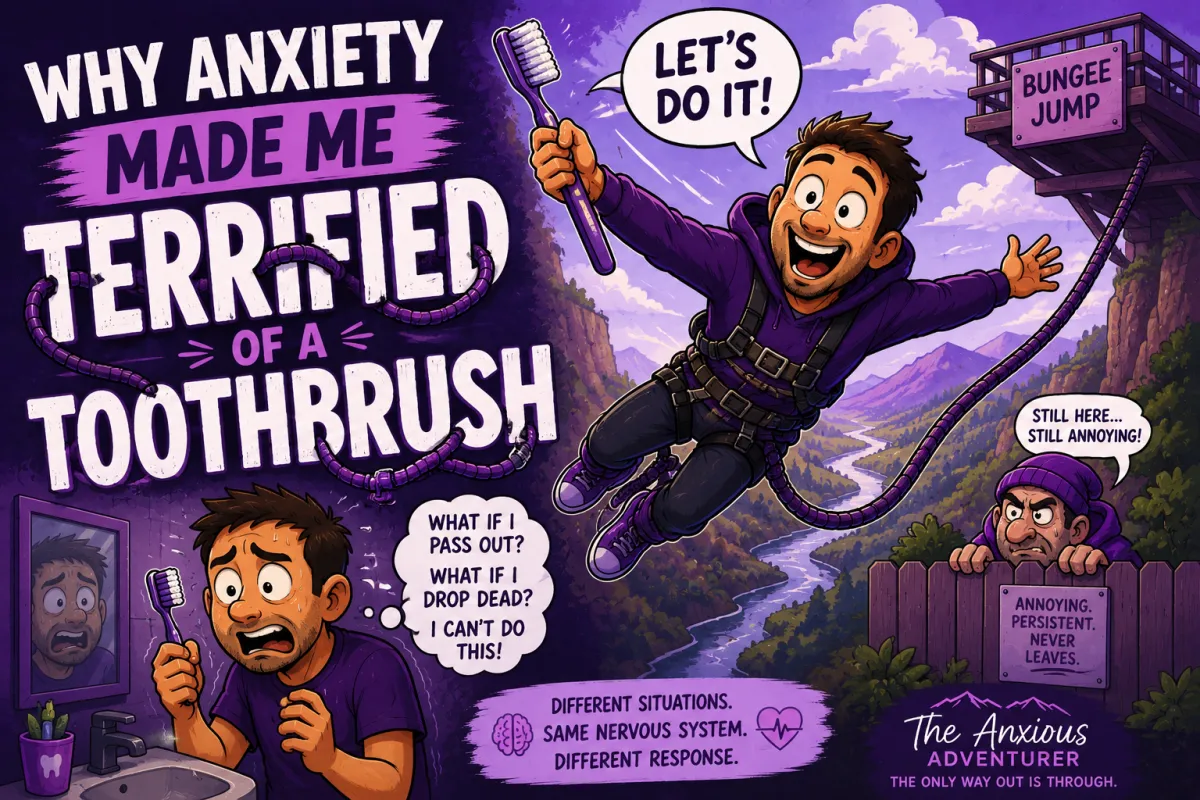
If you want to turbo charge it, run head on into fear. That's what I did, I threw myself into the deepend again and again until I learned to swim. But more on that in another blog.
Until next time, remember the only way out is through.






Mail
Facebook
LinkedIn
X
Pinterest
Snapchat
Reddit